
Hotels in Equatorial Guinea
0 cities · 0 hotels
Equatorial Guinea: Central Africa's Gulf of Guinea Archipelago
Equatorial Guinea is the only Spanish-speaking country in sub-Saharan Africa, a distinction that shapes its culture, cuisine, and colonial architecture in ways that set it apart from neighboring states. The country spans two distinct zones: a mainland region called Río Muni, which borders Cameroon to the north and Gabon to the south and east, and an insular zone that includes Bioko Island in the Gulf of Guinea, roughly 32 km from the Cameroon coast. The capital, Malabo, sits on Bioko's northern tip, while the fastest-growing city, Oyala (officially renamed Ciudad de la Paz), is being developed inland on the mainland as a future administrative center.
Cities Worth Exploring
Malabo is the entry point for most travelers. Spanish colonial facades line the streets near Malabo Cathedral, completed in 1916, and the old port district retains iron-balcony architecture from the late 19th century. Bata, the largest city by population on the mainland, serves as the commercial hub of Río Muni and offers access to forest trails and Atlantic beaches within a short drive. Both cities hold the majority of the country's hotels, from business-class properties serving the oil-sector workforce to smaller guesthouses near local markets.
Bioko Island and the Mainland Forests
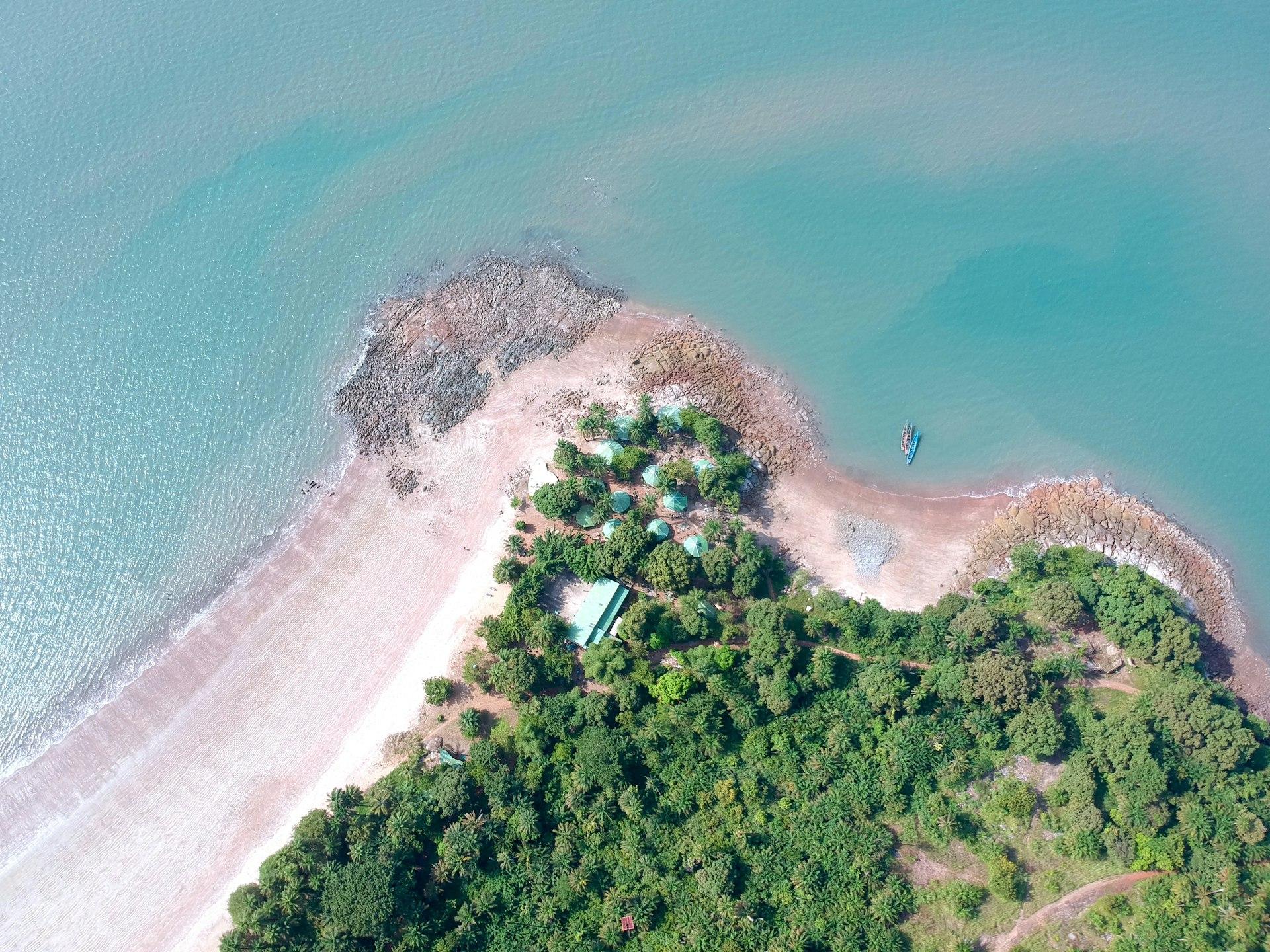
Bioko Island rises from the Gulf of Guinea as a volcanic formation, with Pico Basile reaching 3,011 meters — the highest point in the country and one of the highest peaks in West-Central Africa. Cloud forest covers the upper slopes, sheltering endemic species including the Bioko drill monkey. The island's southern coast, around Ureca, records some of the highest annual rainfall on the African continent and hosts nesting grounds for four sea turtle species. On the mainland, Monte Alén National Park covers approximately 2,000 km² of lowland rainforest and is one of Central Africa's less-visited protected areas, harboring forest elephants, western lowland gorillas, and chimpanzees.
When to Visit Equatorial Guinea
Bioko Island has two dry seasons: a short one in December–February and a longer one from June to August. The mainland follows a similar pattern but with less pronounced rainfall variation. June through August is generally the most practical window for hiking and wildlife observation on both the island and the mainland. Travelers attending the Malabo International Jazz Festival, held annually in July, combine the event with Bioko's drier weeks. Humidity remains high year-round across the country.
Practical Tips for Visiting Equatorial Guinea
- Visa: Most nationalities require a visa obtained in advance; check with the nearest embassy as requirements update frequently.
- Currency: The Central African CFA franc (XAF) is the official currency; ATMs are limited outside Malabo and Bata, so carry sufficient cash.
- Language: Spanish is the primary official language; French is also official, and Fang and Bubi are widely spoken on the mainland and Bioko respectively.
- Getting around: Shared taxis are the standard urban transport in Malabo and Bata; inter-city travel between the island and mainland requires a short flight or ferry crossing.
- Health: Yellow fever vaccination is required for entry; malaria prophylaxis is strongly recommended.
Frequently Asked Questions
Q: What is the capital of Equatorial Guinea? A: Malabo, located on Bioko Island in the Gulf of Guinea, is the current capital. A new administrative capital, Ciudad de la Paz, is under development on the mainland.
Q: Do travelers need a visa for Equatorial Guinea? A: Most nationalities require a visa arranged before arrival. Requirements change periodically, so confirm with an Equatorial Guinean embassy or consulate at least four weeks before travel.
Q: What language is spoken in Equatorial Guinea? A: Spanish and French are both official languages. Indigenous languages including Fang (mainland) and Bubi (Bioko) are widely used in daily life.
Q: What wildlife can travelers see in Equatorial Guinea? A: Monte Alén National Park on the mainland supports forest elephants, western lowland gorillas, and chimpanzees. Bioko Island hosts endemic primate species and four sea turtle nesting species near Ureca.
Q: How do travelers get between Bioko Island and the mainland? A: Regular domestic flights connect Malabo and Bata. A ferry service also operates between the two zones, though schedules can be irregular — confirm departure times locally before travel.