
Hotels in Singapore
1 cities · 3 hotels
Singapore: City-State at the Crossroads of Southeast Asia
Singapore occupies 733 square kilometres at the southern tip of the Malay Peninsula, separated from Malaysia by the Johor Strait. Despite its small footprint, the city-state ranks among the world's busiest cargo ports and welcomes over 19 million international visitors annually. Changi Airport — consistently rated the best-connected hub in Asia — places Singapore within 7 hours of most major Asian capitals and within 13 hours of Europe.
Neighbourhoods Worth Exploring
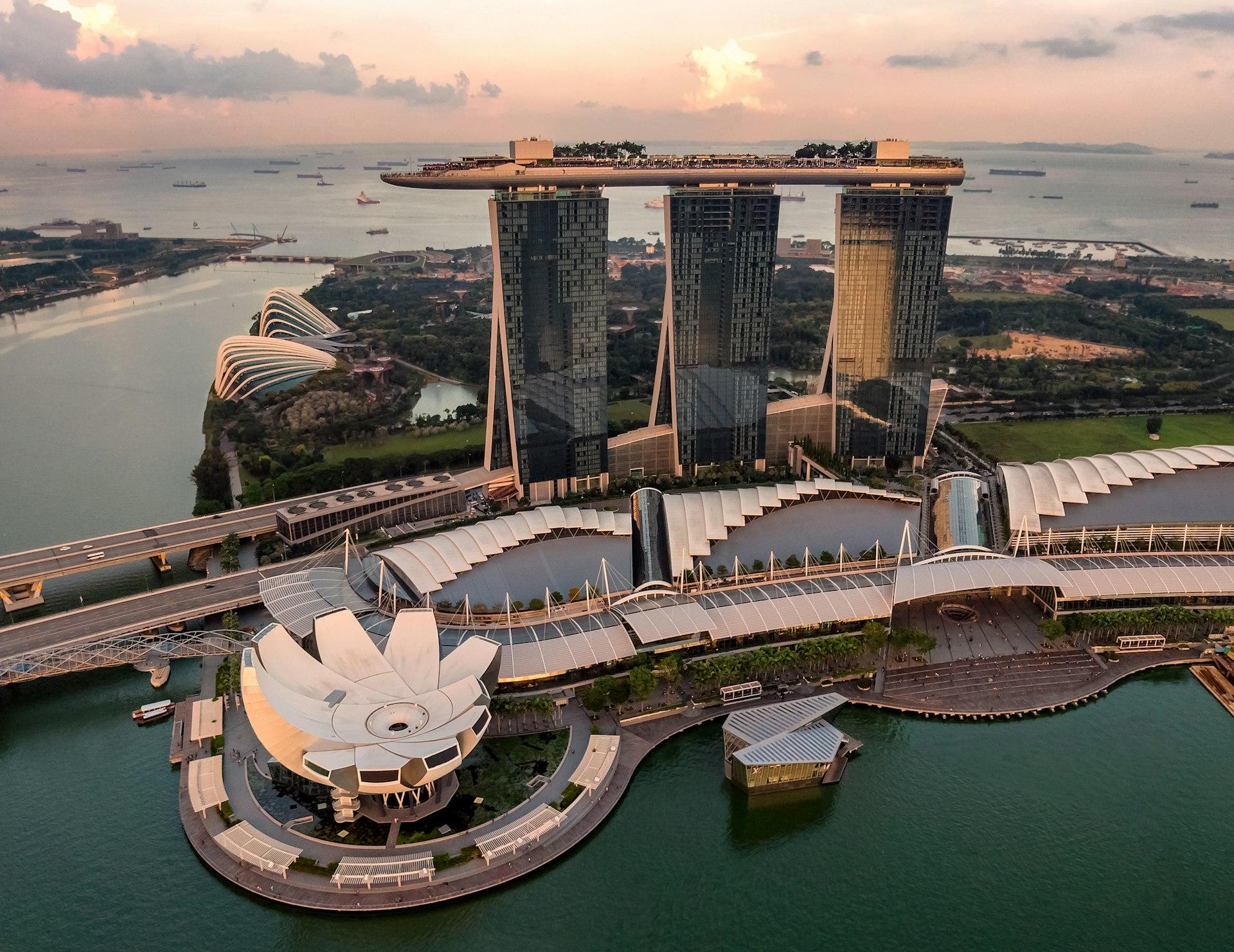
Singapore's identity shifts sharply from one district to the next. Marina Bay is anchored by the 57-storey Marina Bay Sands hotel and the Gardens by the Bay supertrees, which rise up to 50 metres and house over 226,000 plants. Three kilometres west, Chinatown preserves pre-war shophouses along Pagoda Street, while Little India centres on Serangoon Road and the Sri Veeramakaliamman Temple, rebuilt in the 1880s. The Kampong Glam quarter around Sultan Mosque (completed 1932) offers independent boutiques and Arab Street textile traders. Orchard Road — a 2.2-kilometre retail corridor — connects mid-range malls to heritage properties from the colonial era.
Regional Contrasts and Day Trips
Singapore's Sentosa Island, linked by a 710-metre cable car crossing, holds beach resorts, the S.E.A. Aquarium (one of the largest in the world at 45 million litres), and a casino integrated resort. The Southern Ridges trail links Mount Faber (105 m) to Labrador Nature Reserve across a continuous 10-kilometre green corridor — rare open space within a dense urban environment. For regional context, the Johor Bahru causeway crossing is 1 km and accessible by MRT from Woodlands, while Batam Island in Indonesia is a 45-minute high-speed ferry from HarbourFront Terminal.
When to Visit Singapore
Singapore sits 1.3 degrees north of the equator and maintains consistent temperatures between 25 °C and 32 °C year-round. Two monsoon seasons shape rainfall patterns: the Northeast Monsoon runs November through January, bringing heavier sustained rain, while inter-monsoon months (April–May, October–November) produce intense afternoon thunderstorms. February and July are statistically the driest months, making them popular for outdoor sightseeing. The Singapore Food Festival takes place each July; Thaipusam falls in January or February depending on the lunar calendar; Deepavali illuminates Little India each October or November.
Practical Tips for Visiting Singapore
- Getting around: The MRT network covers all major districts; a single-trip card costs SGD 1.40–2.50 depending on distance. Top up an EZ-Link card at any station.
- Currency: Singapore Dollar (SGD). ATMs are available at Changi Airport arrivals and across MRT stations.
- Visa: Citizens of over 60 countries receive visa-free entry for 30–90 days; confirm current conditions before travel.
- Eating: Hawker centres such as Maxwell Food Centre and Lau Pa Sat serve cooked meals from SGD 3–6; restaurant meals average SGD 15–30 per person.
- Chewing gum: Importing or selling chewing gum is prohibited; medical gum requires a prescription.
- Power: Type G sockets (UK-standard, 230 V). Pack adapters if travelling from continental Europe or North America.
Frequently Asked Questions
Q: What is the best area to stay in Singapore? A: Marina Bay and Orchard Road offer the widest hotel selection from budget to 5-star. Chinatown and Bugis provide more affordable options within walking distance of MRT stations.
Q: How many days does Singapore need? A: Three to four days cover the main districts comfortably. Travellers combining Singapore with day trips to Johor Bahru or Batam benefit from five to six nights.
Q: Is Singapore expensive for travellers? A: Mid-range hotels average SGD 180–280 per night. Budget guesthouses in Little India or Chinatown start around SGD 40–70. Hawker centre meals keep food costs low even when accommodation runs higher.
Q: What language is spoken in Singapore? A: English is an official language and the primary medium of business, signage, and government. Mandarin, Malay, and Tamil are co-official; most residents speak at least two languages.
Q: Is tap water safe to drink in Singapore? A: Yes. PUB Singapore produces drinking-grade tap water that meets WHO standards; bottled water is unnecessary for most travellers.