Hotels in Slovakia
5 cities · 97 hotels
Photo by Jan Baborák on Unsplash
Slovakia: Central Europe's Castle-Dense Heartland
Slovakia sits at the geographic centre of Europe, bordering Austria, the Czech Republic, Poland, Ukraine, and Hungary. The country covers 49,035 km² and counts roughly 5.4 million residents. Bratislava, the capital, stands on the Danube just 60 km east of Vienna — closer to a foreign capital than any other EU capital city. That proximity shapes its hotel market, drawing overnight visitors who arrive by river cruise or the 1-hour train from Vienna's Hauptbahnhof.
Cities Worth Exploring
Bratislava anchors the west. Its Old Town compresses Gothic, Baroque, and Art Nouveau facades into a walkable core overlooked by Bratislava Castle, rebuilt in the 18th century and housing the Slovak National Museum. The Čumil bronze figure near Laurinská Street is one of Central Europe's most-photographed street sculptures. East of the capital, Trenčín preserves a 2nd-century Roman inscription on its castle rock — the northernmost confirmed Roman military site in Central Europe. Košice, Slovakia's second city, sits 400 km east in the Košice Region and hosts St. Elisabeth Cathedral, the easternmost Gothic cathedral of its scale in the EU, completed in 1508.
Regions and Landscapes
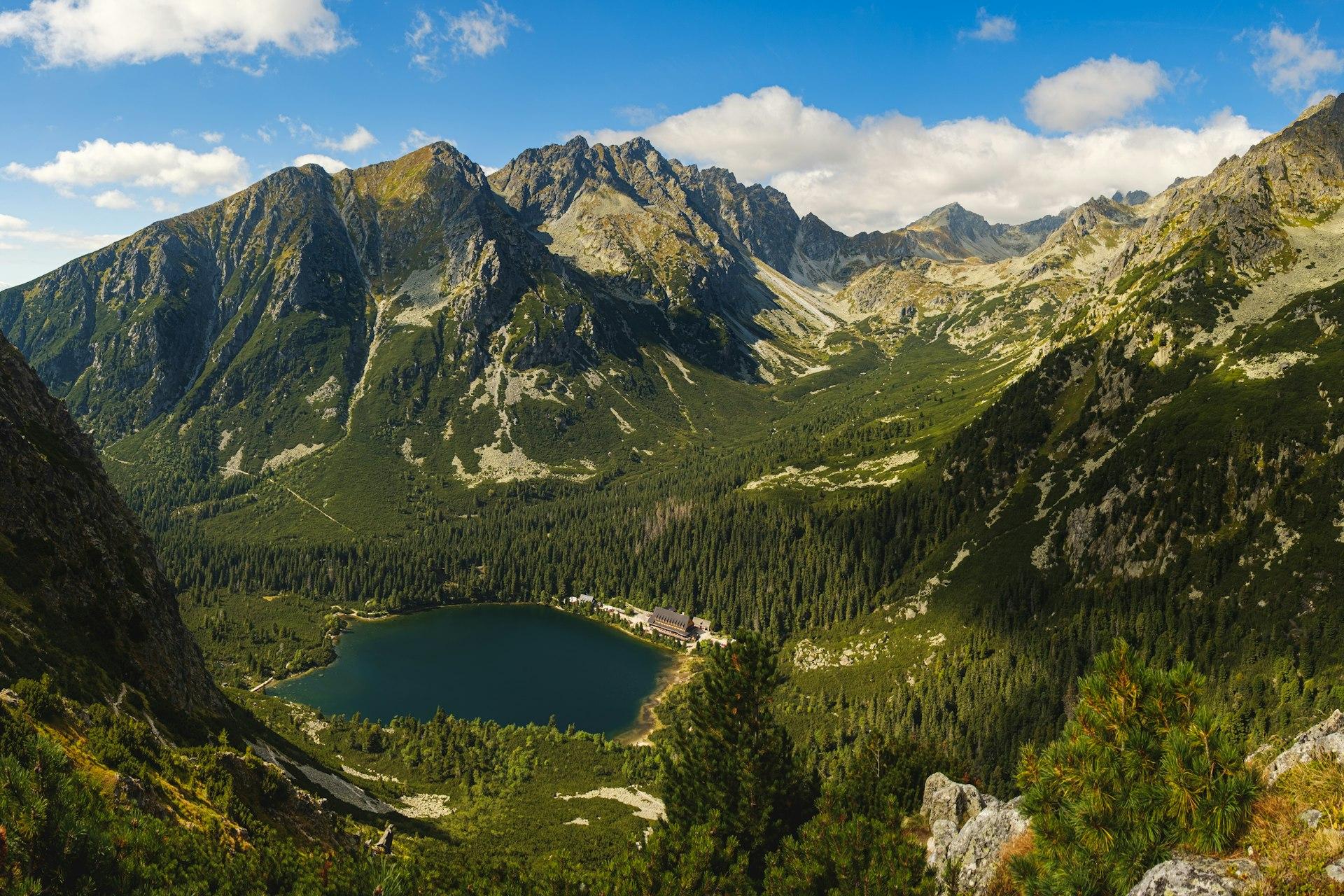
The High Tatras rise along the northern border with Poland, peaking at Gerlachovský štít (2,655 m), the highest point in the Carpathian range. The Štrbské Pleso lake resort at 1,350 m offers year-round access via the Tatra Electric Railway, running since 1908. Ski season runs December through March; hiking trails open May through October. Central Slovakia's Banská Štiavnica, a UNESCO World Heritage Site since 1993, preserves the 18th-century silver-mining infrastructure that once funded the Habsburg Empire. The Slovak Karst in the south holds Domica Cave, part of a cross-border system shared with Hungary and listed under UNESCO since 1995.
When to Visit Slovakia
Slovakia has four distinct seasons. July and August bring the warmest temperatures (averaging 24–27 °C in Bratislava) and the highest hotel occupancy in the Tatras. May and June offer mild weather with fewer visitors; wildflower meadows in the Malá Fatra national park peak in late May. December activates Bratislava's Christmas Market on Hlavné námestie (Main Square), running roughly four weeks from late November — one of the oldest in the region, dating formally to 1993. Winter sports hotels in Jasná, the largest Slovak ski resort (40 km of pistes), fill quickly from late December onward.
Practical Tips for Visiting Slovakia
- Currency: Slovakia uses the euro (€); ATMs are widely available in Bratislava and regional cities.
- Getting around: InterCity trains connect Bratislava to Košice in under 4 hours; RegioJet and FlixBus cover routes to Banská Bystrica and Žilina.
- Language: Slovak is the official language; German is understood in Bratislava's hotel district; English is common in tourist areas.
- Entry: EU/EEA citizens enter without a visa; most other nationalities check Schengen requirements before travel.
- Altitude note: Pack a thermal layer for Tatra excursions even in summer — temperatures drop sharply above 1,800 m.
Frequently Asked Questions
Q: What is the hotel price range in Bratislava's Old Town? A: Budget hotels in Bratislava start around €45–60 per night; mid-range 3-star properties average €80–120. Boutique hotels within the Old Town walls typically price from €130 upward in peak season.
Q: How do travelers reach the High Tatras from Bratislava? A: The direct train from Bratislava hlavná stanica to Poprad-Tatry takes approximately 3 hours 30 minutes. From Poprad, the Tatra Electric Railway reaches Štrbské Pleso and Tatranská Lomnica within 45 minutes.
Q: Is Banská Štiavnica worth an overnight stay? A: The town's open-air mining museum and Calvary Hill walk require at least a full day. Several small guesthouses and boutique hotels operate within the historic centre, making an overnight stay practical.
Q: When does Bratislava's Christmas Market open? A: The market traditionally opens in late November — usually the last weekend — and runs through December 22 or 23. Hlavné námestie hosts the central stalls; a secondary market appears on Františkánske námestie.
Q: What language is spoken in Košice hotels? A: Hotel staff in Košice generally speak English and often Hungarian, reflecting the city's proximity to the Hungarian border (approximately 20 km south). German is less common than in Bratislava.