Hotels in Greenland
2 cities · 2 hotels
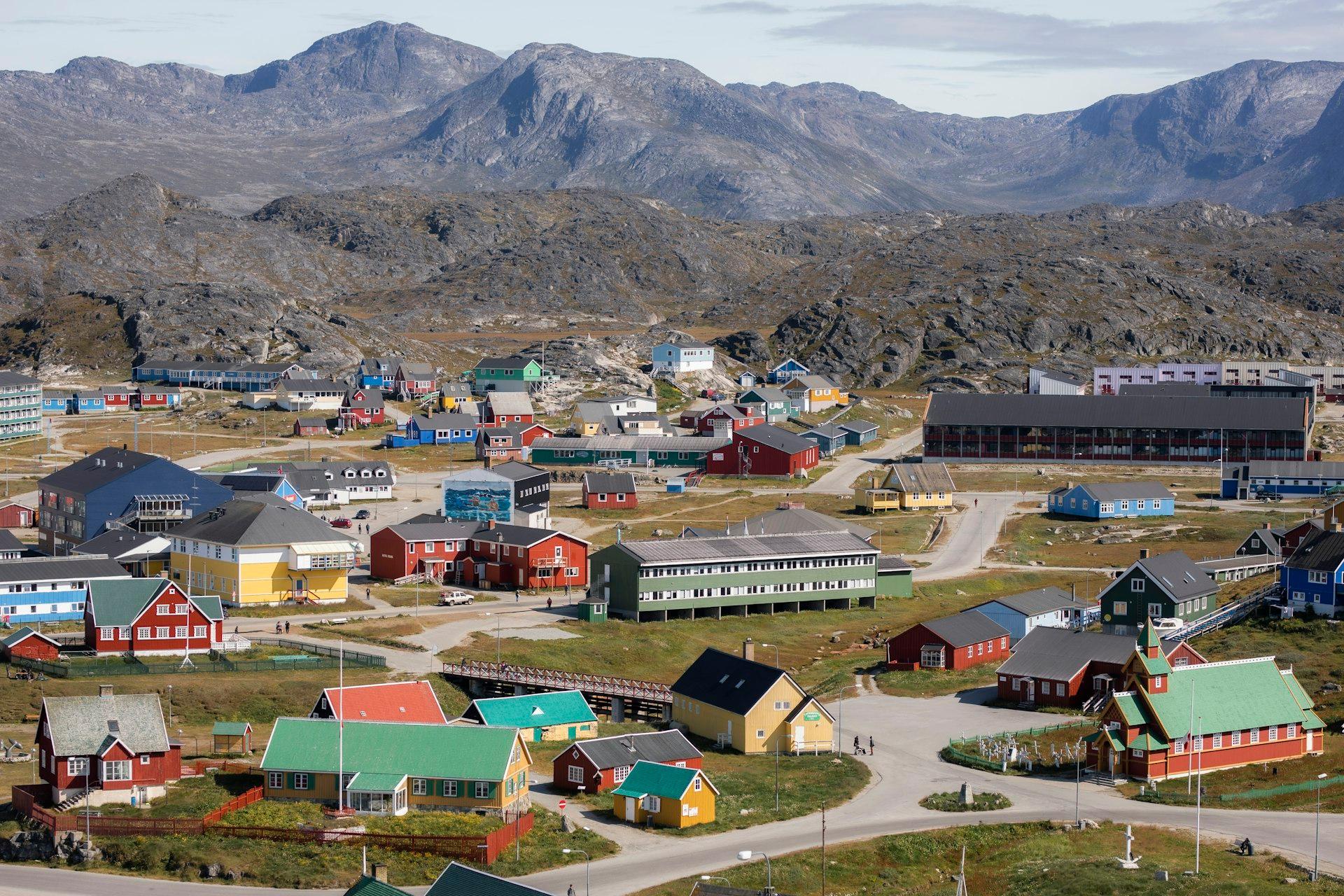
Photo by Visit Greenland on Unsplash
Greenland: Arctic Wilderness Between Two Oceans
Greenland is the world's largest island, spanning 2.166 million km² between the North Atlantic and Arctic Ocean. More than 80% of the landmass lies under the Greenland Ice Sheet, a permanent ice cap up to 3 km thick. The remaining coastal strip — carved by fjords, dotted with colourful wooden houses, and home to roughly 56,000 people — is where all travel happens. The island is an autonomous territory of Denmark, and Nuuk, the capital, sits on the southwest coast at 64°N latitude.
Cities Worth Exploring
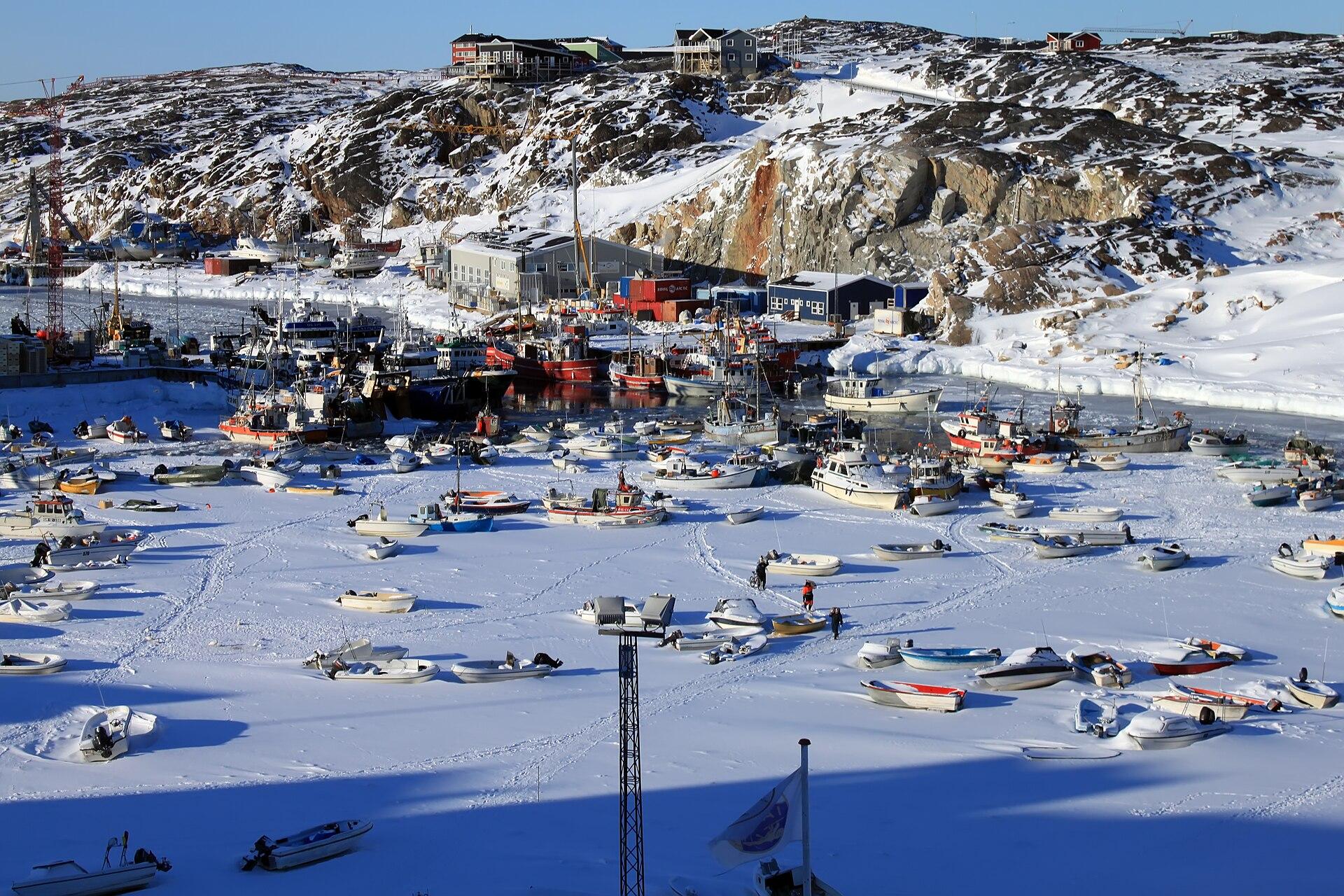
Nuuk anchors the country's services and hotel stock. The Nuuk city centre blends the 18th-century Hans Egede House (built 1728) with a growing restaurant scene in the Nuussuaq district. Ilulissat, 350 km north of Nuuk, is the gateway to the Ilulissat Icefjord — a UNESCO World Heritage Site since 2004 where icebergs calved from the Sermeq Kujalleq glacier drift into Disko Bay. Sisimiut, Greenland's second-largest town, lies 75 km north of the Arctic Circle and is the northern terminus of the Arctic Circle Trail, a 160 km wilderness route. Tasiilaq on the remote east coast receives far fewer visitors and offers direct access to sea-kayaking routes among pack ice.
Seasons and the Northern Lights
Greenland has two sharply defined travel windows. June to August brings the midnight sun: 24-hour daylight above the Arctic Circle, temperatures of 10–15°C on the coast, and boat access to iceberg fields. September to April is the aurora season; the northern lights are visible on clear nights from late August onward, peaking in winter when polar night falls over northern towns. Kangerlussuaq, an inland town built around a former US air base, records 300+ clear-sky days per year — the highest rate in Greenland — making it a reliable aurora base. Dog-sledding routes operate from February to April when sea ice is stable.
Landscape and Activities
The Ilulissat Icefjord produces roughly 46 km³ of ice annually. Humpback whales feed in Disko Bay from July to September. The Greenland National Park in the northeast covers 972,000 km² — the largest national park on Earth — though it is accessible only by expedition. Hikers tackle the Arctic Circle Trail between Kangerlussuaq and Sisimiut in 7–12 days. Settlement hiking near Tasiilaq crosses the Ammassalik Island terrain, where musk ox roam freely. Sport fishing for Arctic char and Greenlandic halibut is possible along river mouths from late summer.
Practical Tips for Visiting Greenland
- Getting there: No road connects towns; travel between settlements requires domestic flights (Air Greenland) or coastal ferry (Arctic Umiaq Line runs May–January).
- Currency: Danish krone (DKK). Card payment is widely accepted in Nuuk and Ilulissat; carry cash for smaller settlements.
- Language: Greenlandic (Kalaallisut) is the official language; Danish and English are spoken widely in hotels and tourist services.
- Pack layers: Coastal temperatures drop sharply after sunset even in July. Windproof outer layers are essential year-round.
- Book early: Hotel capacity across the island is limited. Ilulissat fills quickly from late June; reserve accommodation three to four months ahead for summer travel.
- Time zone: West Greenland (Nuuk, Ilulissat) observes UTC−3 in summer, UTC−4 in winter.
Frequently Asked Questions
Q: What is the best base for seeing icebergs in Greenland? A: Ilulissat is the primary base. The town sits directly above the Ilulissat Icefjord, and short hiking trails from the town centre reach iceberg viewpoints within 20 minutes on foot. Boat tours into Disko Bay depart daily in summer.
Q: Do visitors need a visa to enter Greenland? A: Greenland is not part of the Schengen Area, despite being a Danish territory. Citizens of many countries, including EU nationals, can enter visa-free for stays up to 90 days, but entry rules differ from Denmark proper — confirm requirements with the Danish Immigration Service before travel.
Q: Is Greenland accessible year-round? A: Nuuk and Kangerlussuaq receive flights year-round. Smaller east-coast destinations like Tasiilaq have limited winter air connections. The coastal ferry does not operate December to April.
Q: What currency and budget should travellers expect? A: Costs are high relative to Europe. A mid-range hotel room in Nuuk typically runs 1,200–1,800 DKK per night. Restaurant meals in Ilulissat average 200–350 DKK. Budget for domestic flights, which can add 1,000–3,000 DKK per sector.