
Hotels in U.S. Virgin Islands
2 cities · 3 hotels
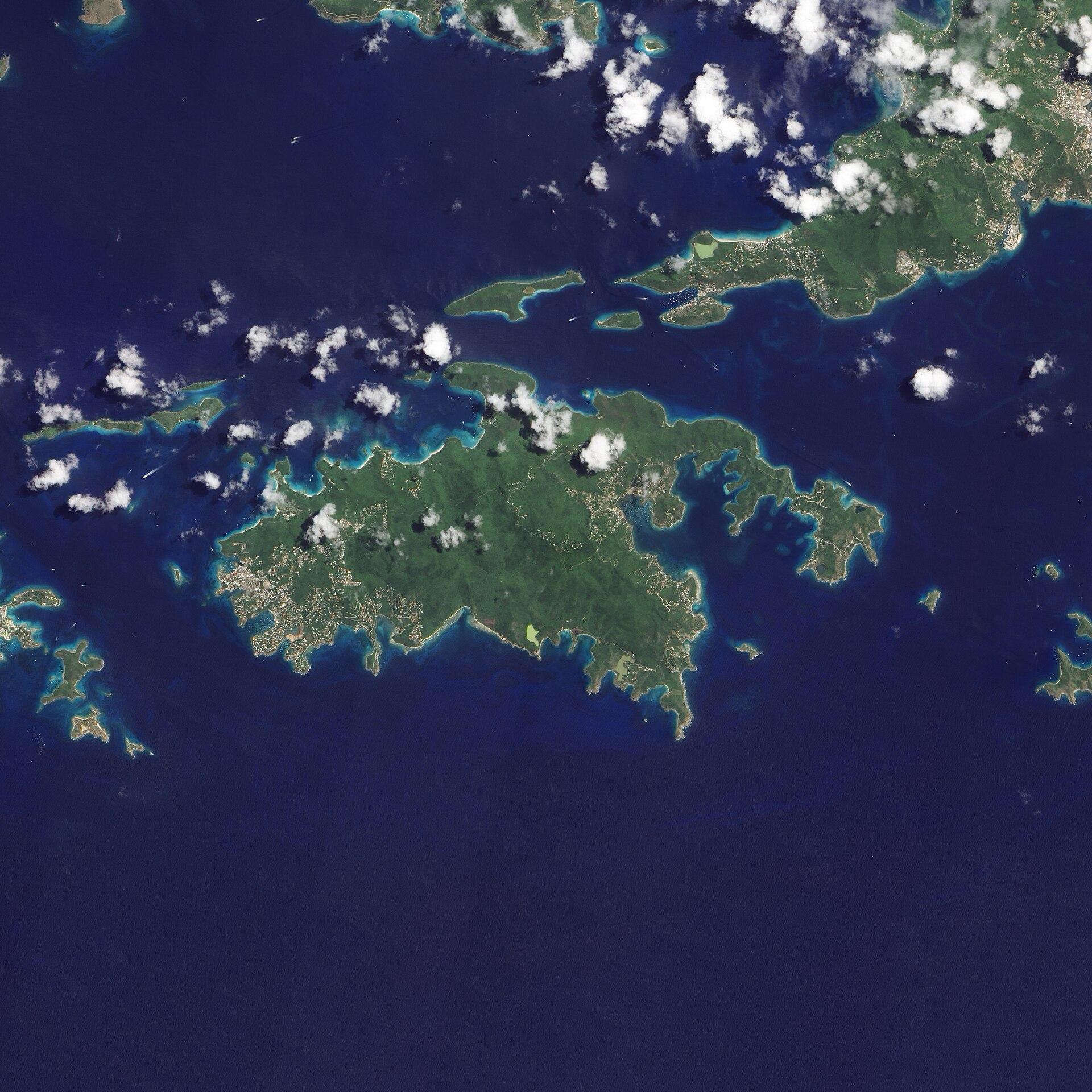
Photo by Wikimedia Commons on Unsplash
U.S. Virgin Islands: Three Main Islands in the Caribbean Sea
The U.S. Virgin Islands sit roughly 1,100 miles southeast of Miami, comprising three principal islands — St. Thomas, St. John, and St. Croix — plus about 50 smaller cays. Purchased from Denmark in 1917 for $25 million, the territory operates under U.S. jurisdiction, meaning American travelers need no passport and can pay in dollars. The islands cover a combined land area of 133 square miles yet hold sharply distinct characters: a cruise-ship hub, a national park island, and a quiet agricultural flatland.
Cities and Settlements Worth Exploring
Charlotte Amalie, the territorial capital on St. Thomas, sits along a natural deep-water harbor and draws more than 1.5 million cruise passengers annually. Its Dronningens Gade (Main Street) runs through 18th-century Danish warehouses converted into duty-free shops selling jewelry, spirits, and electronics. On St. John, the village of Cruz Bay serves as the ferry landing and main hub; two-thirds of the island falls within Virgin Islands National Park, established in 1956 across 7,259 acres of forest and coral reef. Christiansted on St. Croix retains a compact Danish colonial grid anchored by the yellow Fort Christiansvaern, a National Historic Site dating to 1749.
Regions and Natural Features
St. John's Trunk Bay is consistently cited for its underwater snorkeling trail, marked for self-guided exploration at depths of 4–15 feet. Cinnamon Bay, also within the national park, has a campground operating since the 1960s. St. Croix extends 28 miles east to west — the largest of the three islands — and hosts the Buck Island Reef National Monument, whose elkhorn coral barrier reef is accessible by boat charter from Christiansted. St. Thomas draws divers to Cow and Calf Rocks and offers sailing charters departing from Red Hook on the island's east end.
When to Visit the U.S. Virgin Islands
The dry season runs December through April, with average temperatures between 77°F and 85°F. Humidity and rainfall increase May through November; the Atlantic hurricane season officially spans June 1 to November 30. Hurricane Irma and Hurricane Maria struck in September 2017 and caused significant infrastructure damage, though all three islands have since rebuilt most resort and ferry operations. Shoulder months — May and November — offer lower hotel rates with minimal weather risk. Annual events include the St. Croix Agriculture and Food Fair in February and Carnival celebrations on St. Thomas in late April.
Practical Tips for Visiting the U.S. Virgin Islands
- Getting there: Daily nonstop flights operate from Miami, New York (JFK), Atlanta, and Charlotte into Cyril E. King Airport on St. Thomas; St. Croix's Henry E. Rohlsen Airport receives direct service from Miami and Atlanta.
- Island connections: Passenger ferries connect St. Thomas (Red Hook dock) to St. John (Cruz Bay) in roughly 20 minutes; the fare runs around $7 each way. St. Croix requires a separate flight or seaplane from St. Thomas.
- Currency and entry: U.S. dollars; no passport required for American citizens. Non-U.S. travelers should carry a valid passport.
- Driving: Traffic moves on the left side of the road despite right-hand-drive vehicles — allow adjustment time.
- Booking: Reserve hotels and villa rentals at least 60–90 days ahead for the December–March peak window.
Frequently Asked Questions
Q: Do U.S. citizens need a passport to visit the U.S. Virgin Islands? A: No passport is required for U.S. citizens traveling directly from the mainland. A government-issued photo ID such as a driver's license suffices for the outbound flight, though a passport is recommended as re-entry ID.
Q: Which island is best for families with children? A: St. John suits families seeking calm, protected waters; Trunk Bay and Maho Bay have gentle surf and shallow reef areas appropriate for snorkeling beginners. The national park setting limits motorized traffic on many roads.
Q: How do travelers get between the islands? A: St. Thomas and St. John are linked by public ferries from Red Hook and downtown Charlotte Amalie. Reaching St. Croix requires a 30-minute flight via Cape Air or Seaborne Airlines, or a charter seaplane from St. Thomas.
Q: What is the currency used in the U.S. Virgin Islands? A: The U.S. dollar is the official currency. Major credit cards are accepted at most hotels and restaurants; smaller vendors in rural St. Croix and outer cays may be cash-only.
Q: When does hurricane season affect travel plans? A: The Atlantic hurricane season runs June 1 through November 30, with peak activity in August and September. Travel insurance with hurricane cancellation coverage is advisable for bookings during this window.