Hotels in Kazakhstan
7 cities · 79 hotels
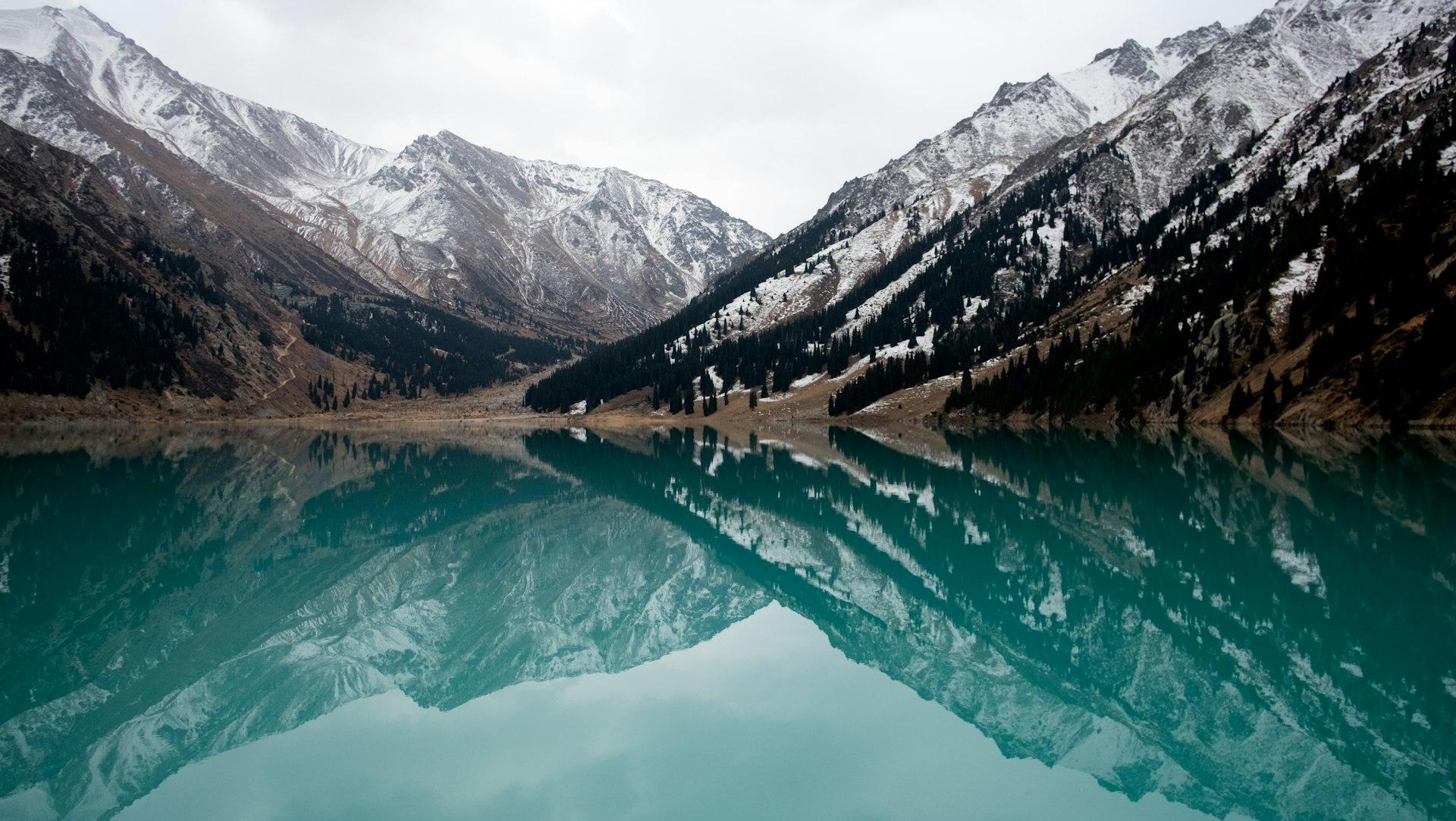
Photo by Polina Skaia on Unsplash
Kazakhstan: Steppe, Silk Road Cities, and the World's Ninth-Largest Country
Kazakhstan covers 2.7 million square kilometres — roughly the size of Western Europe — stretching from the Caspian Sea shore in the west to the Altai Mountains on the Chinese border in the east. That scale shapes everything: travel distances between cities are measured in hours by air, the steppe rolls unbroken for hundreds of kilometres, and landscapes shift from salt flats to canyon country to alpine glaciers within a single itinerary.
Cities Worth Exploring
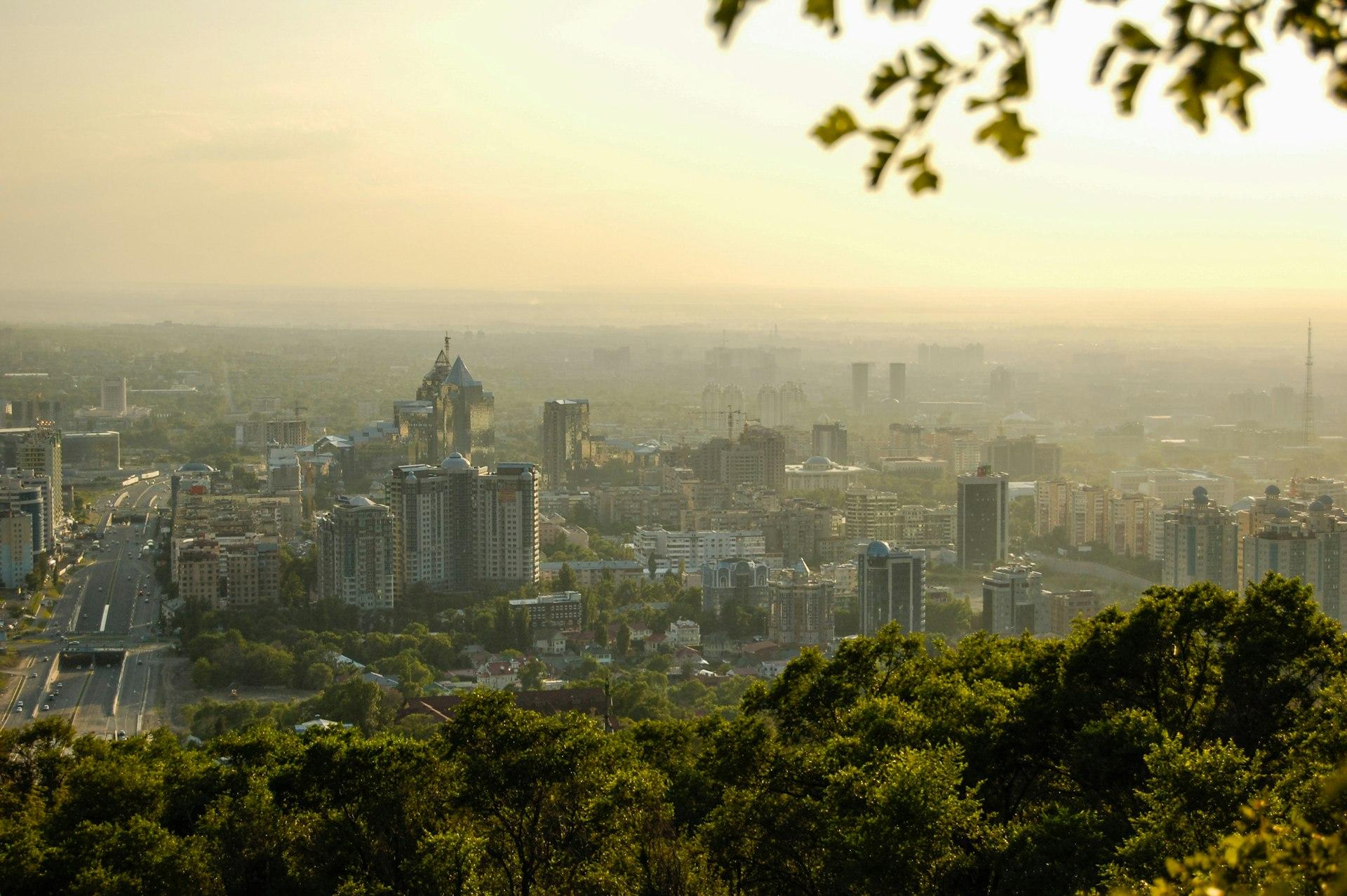
Almaty, the former capital of 2 million people, sits at the foot of the Trans-Ili Alatau range at roughly 900 m elevation. The Medeu skating rink — the world's highest outdoor speed-skating rink at 1,691 m — is 15 km southeast of the city centre. The Shymbulak ski resort rises another 1,000 m above Medeu and operates lifts from November through April. Downtown, the Zenkov Cathedral (built 1907 without a single nail) anchors Panfilov Park.
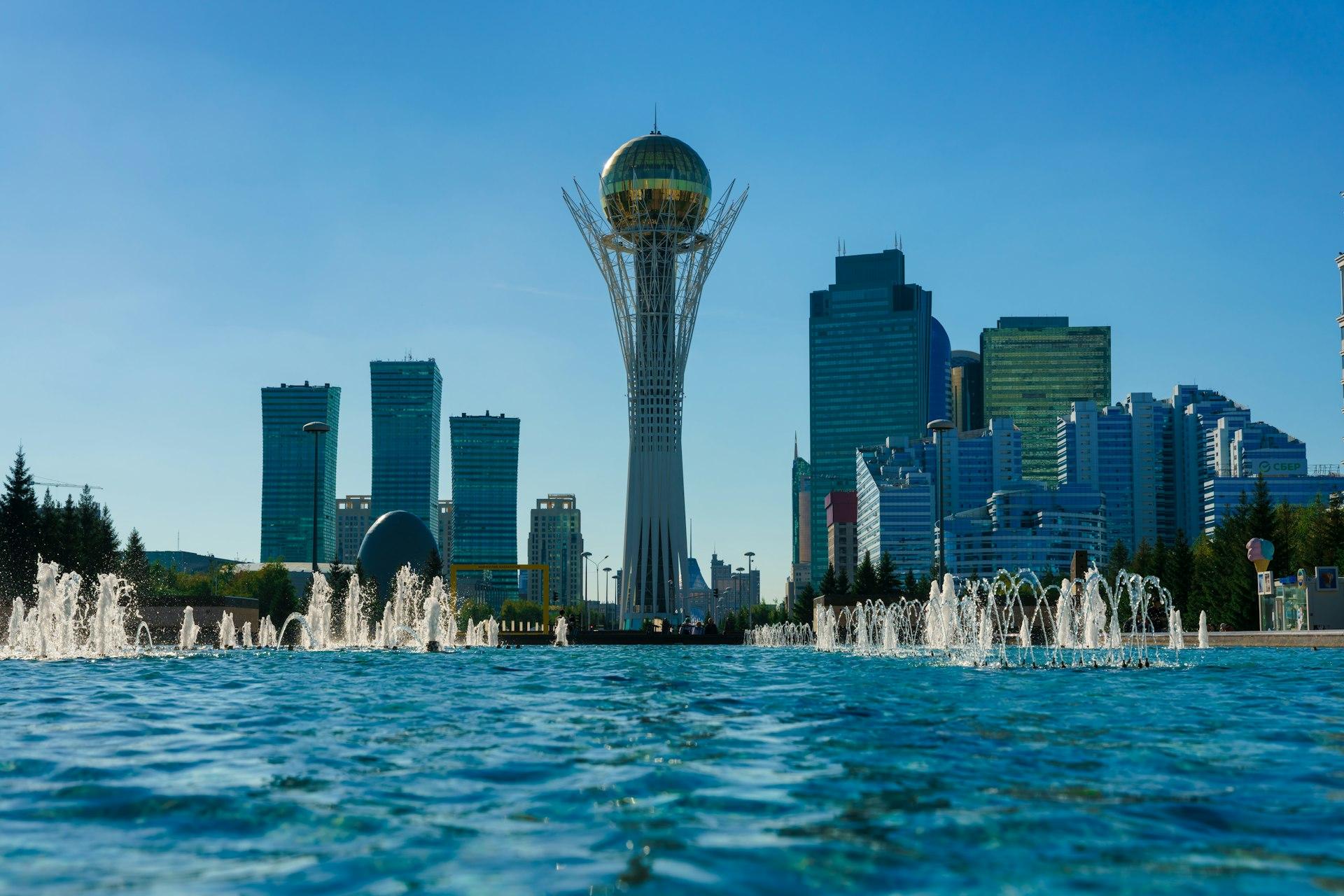
Astana, the purpose-built capital inaugurated in 1997, now holds around 1.2 million residents. The Bayterek Tower stands 97 m tall on Nurzhol Boulevard, a pedestrian axis flanked by ministries and the glass-domed Khan Shatyr shopping centre designed by Norman Foster. The Palace of Peace and Reconciliation — a 77-m glass pyramid — hosts the Congress of Leaders of World and Traditional Religions every three years.
Silk Road Heritage and Landscape Routes
Southern Kazakhstan anchors the country's Silk Road corridor. Turkestan, 160 km north of the Uzbek border, centres on the Mausoleum of Khoja Ahmed Yasawi, a UNESCO World Heritage Site begun in 1389 under Timur. The complex remains one of the largest surviving Timurid structures in Central Asia. The nearby medieval city of Sauran (13th–17th centuries) is visible as extensive mud-brick ruins.
West of Almaty, the Charyn Canyon runs 154 km through the Charyn River valley; its Valley of Castles section reaches 300 m depth and draws comparison to the American Southwest. The Kolsai Lakes — three glacial lakes at 1,800–2,650 m elevation in the Northern Tian Shan — are 330 km southeast of Almaty and accessible from May to October.
When to Visit Kazakhstan
The climate is sharply continental. Almaty summers (June–August) reach 30–35 °C; winters drop to −15 °C. Astana winters average −15 to −20 °C — among the coldest capital cities on earth — while summers are warm at 25–28 °C. For steppe and canyon travel, May–June and September offer moderate temperatures. Ski season at Shymbulak peaks January–March. The Nauryz Meiramy spring festival on 21–23 March draws large celebrations in every major city.
Practical Tips for Visiting Kazakhstan
- Visa: Citizens of 70+ countries enter visa-free for 30 days (as of 2024); check the eVisa portal for others.
- Getting around: Domestic flights connect Almaty, Astana, Shymkent, and Aktau; the Talgo express train covers Almaty–Astana in roughly 12 hours.
- Currency: Kazakhstani tenge (KZT); card acceptance is high in Almaty and Astana, lower in rural areas.
- Altitude: Pack layers for Almaty evenings — temperatures drop sharply after sunset year-round.
- Language: Kazakh and Russian are both official; Russian is widely spoken in cities.
Frequently Asked Questions
Q: What is the best base city for first-time visitors? A: Almaty is the most practical starting point — it has the largest international airport, a wider hotel range, and proximity to the Tian Shan mountains. Astana suits travellers focused on modern architecture and the central steppe.
Q: Is Kazakhstan safe for independent travellers? A: Kazakhstan ranks among the safer Central Asian destinations. Petty theft in markets warrants usual precautions; road conditions outside major highways can be poor, so hiring a local driver for remote routes is advisable.
Q: How many days does a Kazakhstan trip require? A: A focused itinerary covering Almaty, Charyn Canyon, and Astana takes 8–10 days. Adding Turkestan and the Kolsai Lakes extends the trip to 14 days.
Q: What currency should travellers carry? A: The Kazakhstani tenge (KZT) is the only legal tender. ATMs in Almaty and Astana dispense tenge from international cards; carry some cash for guesthouses and rural fuel stops.
Q: When does Shymbulak ski resort operate? A: Lifts typically run from late November through early April, with peak snow coverage in January and February. The resort is 25 km from central Almaty via a gondola system from Medeu.