
Hotels in Paraguay
1 cities · 1 hotels
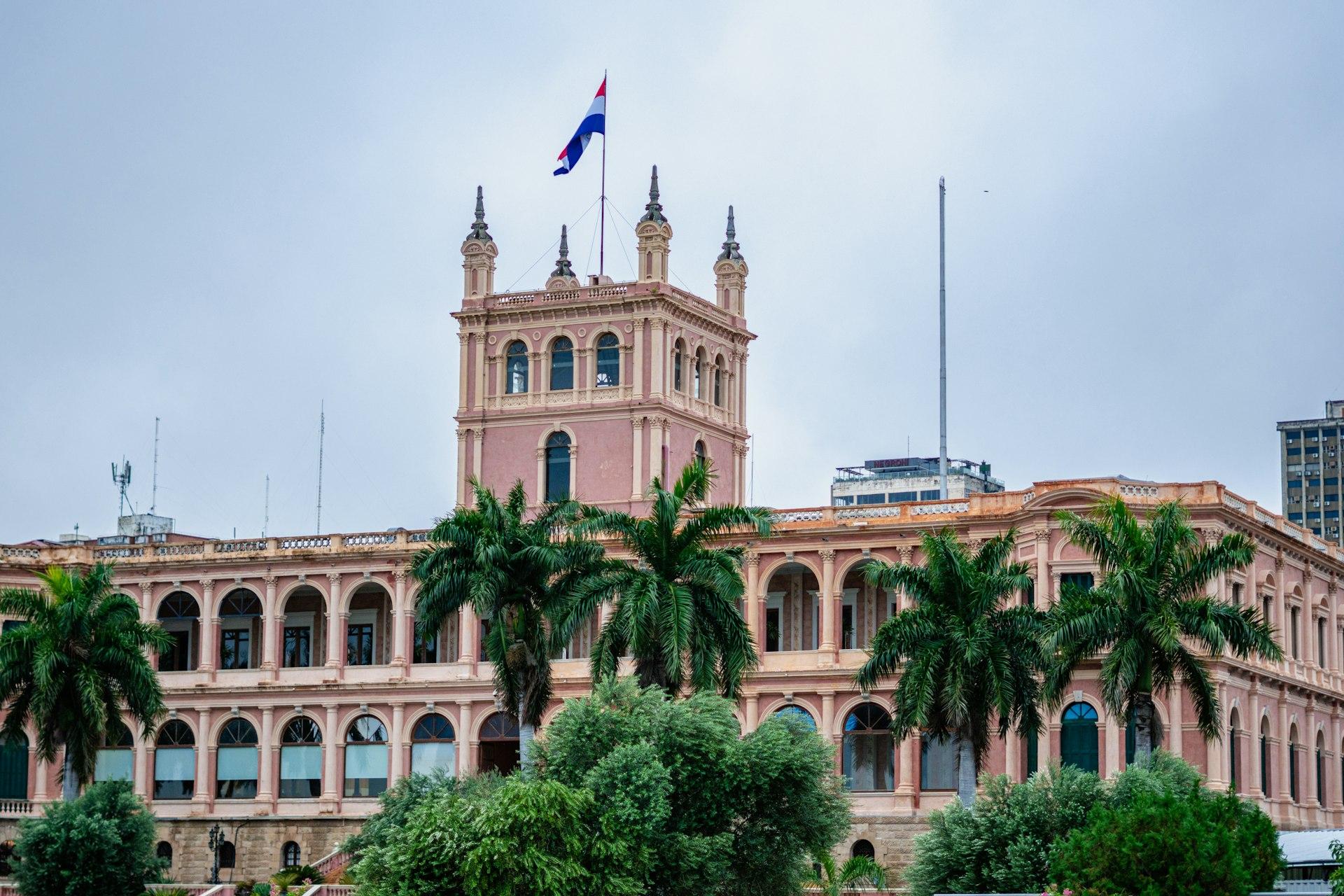
Photo by Tobias Meza on Unsplash
Paraguay: South America's Landlocked Heart
Paraguay sits at the geographic center of South America, bordered by Argentina, Bolivia, and Brazil. The Río Paraguay divides the country into two halves: a densely populated eastern region and the vast Gran Chaco scrubland to the west, which covers roughly 60% of national territory but holds fewer than 3% of the population. Founded in 1537, Asunción ranks among the oldest continuously inhabited cities on the continent.
Cities Worth Exploring
Asunción, the capital, spreads along the eastern bank of the Río Paraguay. The Palacio de los López and the Panteón Nacional de los Héroes anchor the colonial core, while the Mercado 4 neighborhood sells herbs, electronics, and textiles across several city blocks. About 370 km southeast, Encarnación faces the Argentine city of Posadas across the Paraná River. Encarnación hosts one of South America's most-attended carnivals each February, drawing visitors to its Costanera beachfront promenade. Ciudad del Este, near the Itaipu Dam on the Brazilian border, functions as a major commercial hub.
Jesuit Missions and the Eastern Region
Travelers with an interest in colonial history head to the Misiones department, where 17th- and 18th-century Jesuit Reductions left stone ruins across the subtropical forest. The ruins at Trinidad and Jesús de Tavarangüe, both UNESCO World Heritage Sites since 1993, stand within 10 km of each other near Encarnación. The Itaipu Hydroelectric Dam, jointly operated by Paraguay and Brazil since 1984, generates roughly 76% of Paraguay's electricity; tours run daily from the Ciudad del Este side.
When to Visit Paraguay
April through October offers the most comfortable temperatures, with highs between 20°C and 28°C across the eastern region. November to March brings heat and humidity, with afternoon thunderstorms common. Encarnación's Carnaval Encarnaceno runs Friday and Saturday nights throughout February — considered the largest carnival in the Southern Cone outside Brazil. The Chaco is best visited between May and August, when daytime temperatures stay below 35°C.
Practical Tips for Visiting Paraguay
- Language: Spanish and Guaraní are both official; Guaraní is widely spoken outside Asunción.
- Currency: The Guaraní (PYG) is the local currency; ATMs are common in Asunción and Ciudad del Este.
- Getting around: Long-distance buses connect major cities reliably; the Asunción–Encarnación route takes roughly 5 hours.
- Border crossings: The Friendship Bridge links Ciudad del Este to Foz do Iguaçu, Brazil; allow extra time during peak shopping periods.
- Electricity: 220V, Type C plugs; pack an adapter for North American devices.
Frequently Asked Questions
Q: What is the best base for visiting the Jesuit ruins? A: Encarnación is the most convenient base. Trinidad is 28 km northeast of the city and Jesús de Tavarangüe is 36 km away; both are reachable by local bus or taxi.
Q: Do visitors need a visa to enter Paraguay? A: Citizens of the USA, EU, UK, Australia, and most South American countries enter visa-free for up to 90 days. Confirm current requirements with the Paraguayan consulate before traveling.
Q: How far is Asunción from Iguazú Falls? A: The falls straddle the Argentina–Brazil border roughly 330 km east of Asunción by road; most travelers combine a visit with a stop in Ciudad del Este or cross into Brazil at Foz do Iguaçu.
Q: What languages are spoken in the Chaco? A: Spanish and Guaraní are common, but several indigenous communities speak distinct languages including Nivaclé and Ayoreo. German is also spoken in Mennonite colonies around Filadelfia.